Insights by the Pros with ILM Senior Animator Lucas Nunes
Discover Senior Animator Lucas Nunes’ journey from Brazil to ILM Vancouver and his insights on creativity, collaboration, and personal animation work.
‘’Fundamentals are really important, and the more you grow, the more you realize that.’’
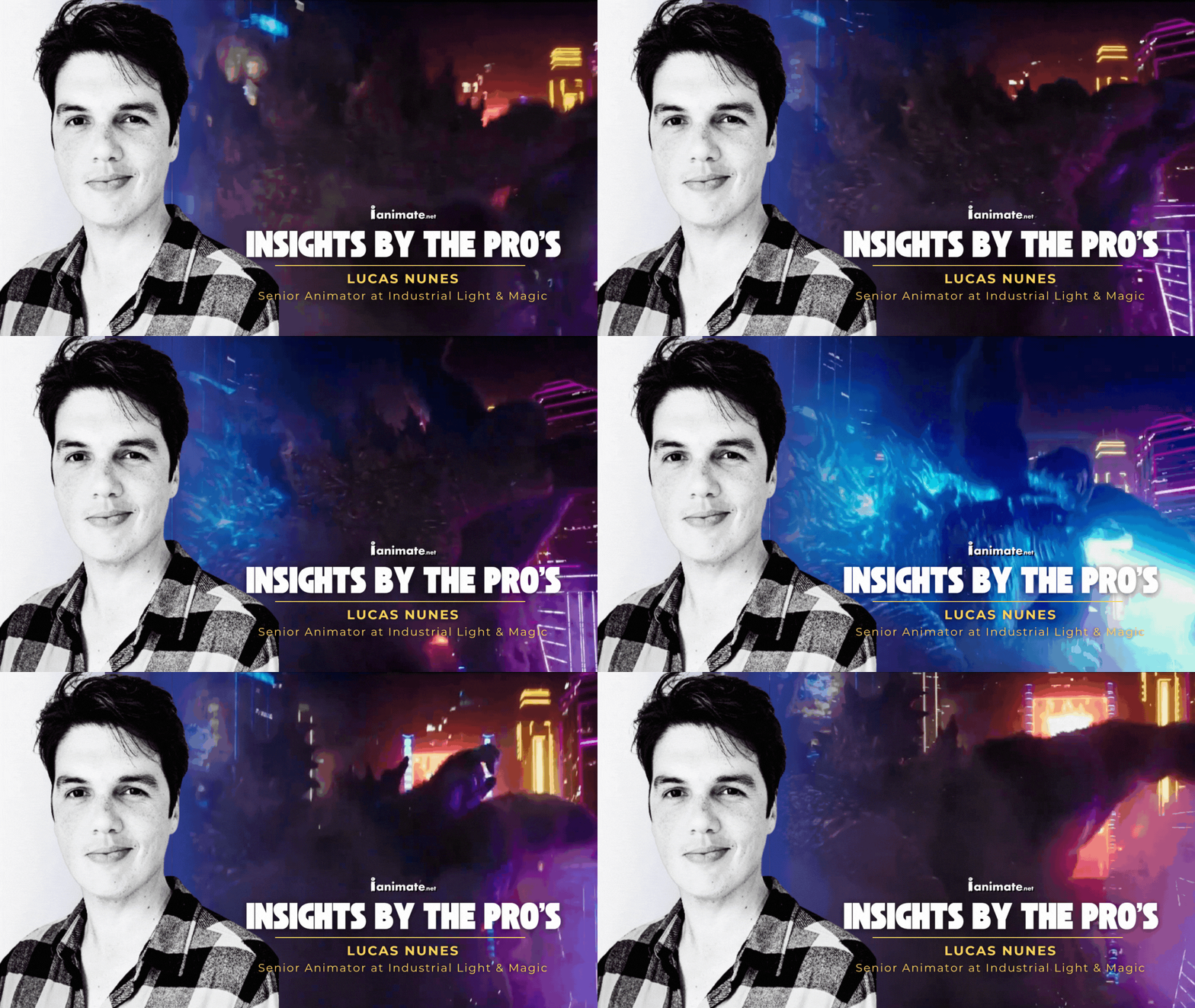
Meet Lucas Nunes, a talented Senior Animator at Industrial Light & Magic (ILM) Vancouver) whose journey began in Brazil and led him to one of the world’s most iconic visual effects studios. After taking iAnimate’s Creature Workshops in 2015–2016, Lucas honed not only his technical skills but also his creative voice—one that shines brightly in both his professional and personal projects.
In his interview, Lucas reflects on the collaborative nature of studio work versus the freedom of personal animation, encouraging artists to embrace their individuality: “A personal shot, that’s you. Your taste, your ideas… Don’t be afraid to show yourself through your personal work!”
Stay tuned as we dive into Lucas’s story—his path, creative philosophy, and insights for aspiring animators carving out their own artistic journey.
Animation Pro Interview
Animation Journey and Inspiration
iAnimate: Tell us a bit about your animation journey and throughout your time with us. Who or What inspired you to become an animator? How did you become an animator, and when did iAnimate become part of your journey?
Lucas: I was very lucky to grow up in the 90's, right during Disney Animation's renaissance and the start of Pixar, so their movies were definitely an inspiration to me. However, it was Jurassic Park that cemented my passion and put me on the path to do what I do today. My dad is a retired Geologist, he loves dinosaurs, so I obviously grew up obsessed with dinosaurs as well. In that day and age where nothing like Jurassic Park existed before, you can imagine how it was for a little kid to watch that movie for the first time at the theater: it probably completed changed my brain chemistry. When watching (obsessively) the behind the scenes on VHS, the names "Stan Winston Studios" and "ILM" kept showing up, so I told everyone I wanted to work at those places. As a kid in Brazil, I might as well have announced I was going to be the first Astronaut landing on Mars.
iAnimate: Can you tell us more about your role and responsibilities?
Lucas: My role as an Animator in VFX is pretty much to bring life to 3D characters and objects. The cool thing about VFX Animation is that you are never animating the same things! One day you are animating characters, creatures and spaceships that are obviously 3D animated, but other days you have to animate "invisible" vfx, like cars, planes, cables and doors. The later might not seem as fun, but the tricky part is to make sure no one notices it's not real! Which, at least to me, it's the fun part of some of these tasks
Animation Lessons and Growth
iAnimate: How did iAnimate help prepare you for the industry? What were the most important things you learned at iAnimate?
Lucas: I remember being really anxious before starting Creature Workshop 1. All those students' reels had a quadruped running and jumping around, and I was certain I wouldn't be able to do that at all. Learning to break a huge and complicated shot into smaller tasks was crucial, and at the end of the workshop, I had a lioness running around and "hunting" a small, silly robot!
Another thing that I've learned and helped me out a lot: we will always get tasks that might not seem super exciting. Not every shot in the movie is a cool creature fight; sometimes, you have to animate a blurry helicopter going from A to B in the background of the plate, and it has to be well animated. Try to find something interesting about your task, like in this example, learn about the basics of helicopter flight mechanics! I swear it's more interesting than it sounds
iAnimate: What is the most challenging shot you’ve ever animated, and why did you succeed at the shot?
Lucas: I can't talk about yet about my most challenging one yet!
But if I can say this about a few others: a lot of the challenge can come from having to animate so many different versions of the same shot, because the client doesn't know what they want yet. It can be really tricky to keep the motivation going when you think that no matter what you do, it will be "wrong". In these cases, it's just about being professional, don't stress, do your best on every version, and move on. The shot will get done at some point : )
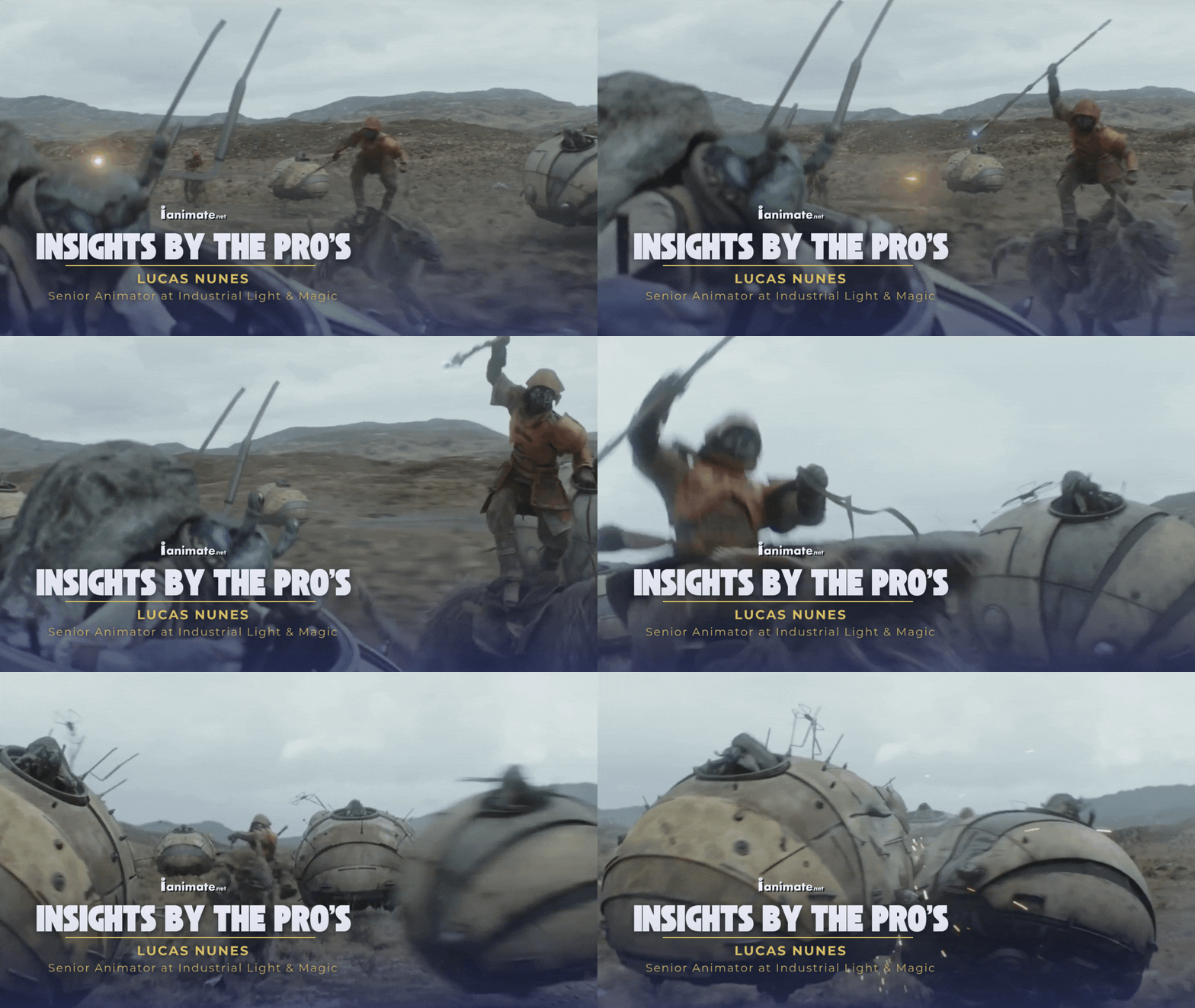
[Luca's Current Reel]
iAnimate: Do you have any demo reel or interview advice you can share with animators on the job hunt?
Lucas: Research about the kind of work the company you want to work for do, and tailor your demo reel to them. I know that interviews can be extremely nerve wrecking (I didn't even need a cup of coffee before my interview with ILM, since my heart rate was already through the roof), but it's usually just a nice conversation about you, what you have been doing professionally, and maybe taking a look at your reel while asking questions about it. Be nice, be yourself : )
PS: I did have a "bad" interview one time, for a company I won't mention the name. There were five people interviewing me, and they were so serious, probably all of them going through some really tiring projects, and by their expressions some clearly did not want to be there. It was a very awkward 15min zoom call. It happens!
iAnimate: What other advice do you have for current or future iAnimate students?
Lucas: Don't be afraid to put a bit of yourself in your animation exercises!

Animation Career Advice & Tips
iAnimate: If there’s one animation tip or technique you’d share with someone wanting to animate in a feature film, what would it be?
Lucas: Take a deep breath, maybe reconsider going to Med School. Jokes apart, have it in mind that it's a long journey, like any craft. I'm learning sculpting right now (in clay), and when I pointed at one horse sculpture exercise from one past student to my teacher, and asked him when I would be able to that that same exercise, he said: "In around five years. But wait, you did one already, so only four!"
Don't forget to have fun. You are still learning how to animate a bouncing ball, but during the weekend, you want to download that cool dragon rig and animate it fighting five bears? Do it, have fun! Save those playblasts, it's fun to see our improvement throughout the years.
iAnimate: Given that there’s so much to learn, how would you recommend a brand new animator start their training?
Lucas: Fundamentals are really important, and the more you grow, the more you realize that. I know that the bouncing ball exercise is not something that a student is eagerly looking forward to it, but let me tell you, every time I animated Kong punching Godzilla, I was thinking of King Kong's hand as a bouncing ball. So kids, you want to animate Kong? Animate a bouncing ball.
iAnimate: What makes a great animator or an animator a studio would hire?
Lucas: Personality: being a nice person to work with, someone who takes feedback well. Again, it's a group project. We all get feedback on our shots, it doesn't matter if you just started or have 30 years of experience.
Animation: a nice mechanics shot of a person arriving home, putting their shoes away and sitting at the couch is way more impressive than a creature fight, with a super shaky cam that it's definitely not there to hide poor body mechanics.
Want to learn what Disney, Pixar, and Blizzard do in their animations?
Be mentored by industry professionals from the leading studios in the industry. Start your animation career and get the dream animation job you want! Learn more about iAnimate and the Workshops that are made just for you.