Insights by the Pros with Senior Animator Noel Mahoney
Meet Noel Mahoney, Senior Animator at Paramount Pictures and an iAnimate alum. Learn how he went from student to games, to ILM, and to Jurassic World Rebirth.
‘’iAnimate helped me bridge the gap between studying animation and getting my foot in the door of the industry.’’
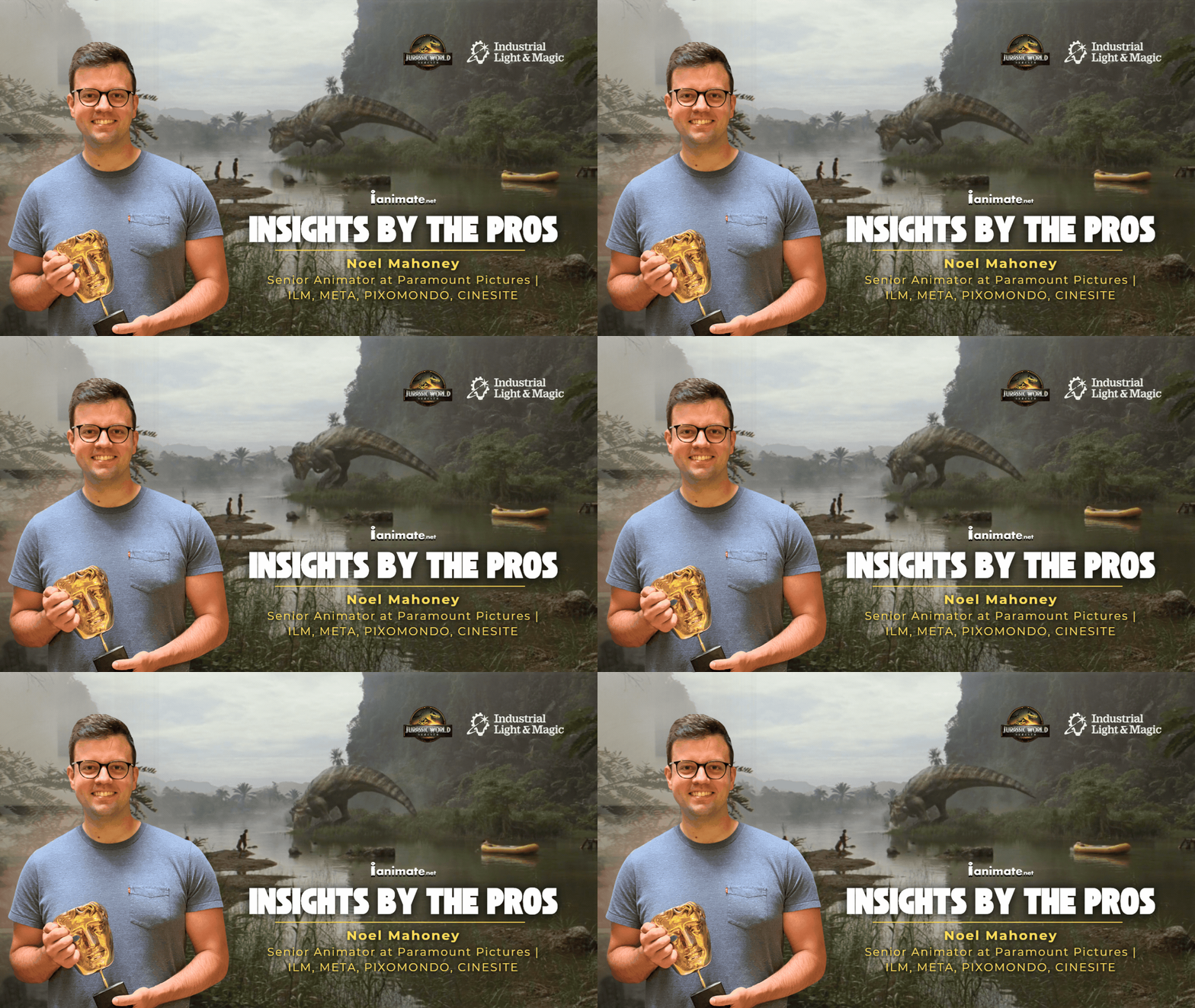
From Environment Artist to Senior Animator: Noel Mahoney’s Journey to Paramount Pictures
Noel Mahoney didn’t start as an animator. He began his career as an environment artist in games, then moved into VFX as a CG Generalist, building a broad technical foundation before making the leap that would define his career: specialising fully in character and creature animation in 2020.
That same year, he enrolled at iAnimate in Body Mechanics and Feature Character Animation (April to July 2020), where mentor Jason Keene helped him sharpen his body mechanics and strengthen his performance work.
The results speak for themselves. With more than 10 years in the CG industry, Noel has since worked at studios including Industrial Light & Magic, Cinesite, Proof Inc., Pixomondo, and Meta, and now serves as a Senior Animator at Paramount Pictures. His credits include Jurassic World Rebirth, Black Panther: Wakanda Forever, The Witcher: Season 3, and The Dinosaurs.
In this interview, Noel shares how he pivoted into animation, what he learned along the way, and the advice he’d give animators who want to build a career at the highest level of the industry.
Animation Pro Interview
Animation Journey and Inspiration
iAnimate: Tell us a bit about your animation journey and your time with us. Who or what inspired you to become an animator? How did you become an animator, and when did iAnimate become part of your journey?
Noel: I’ve dreamt of being an animator since I was a kid. At university I studied Computer Games Modelling & Animation, but when it came time to specialise, I somehow convinced myself not to choose animation and went with 3D art instead. It felt like the “safer” path at the time (a choice I’ve often wondered about since!). Still, the years went by, and animation kept pulling me back.
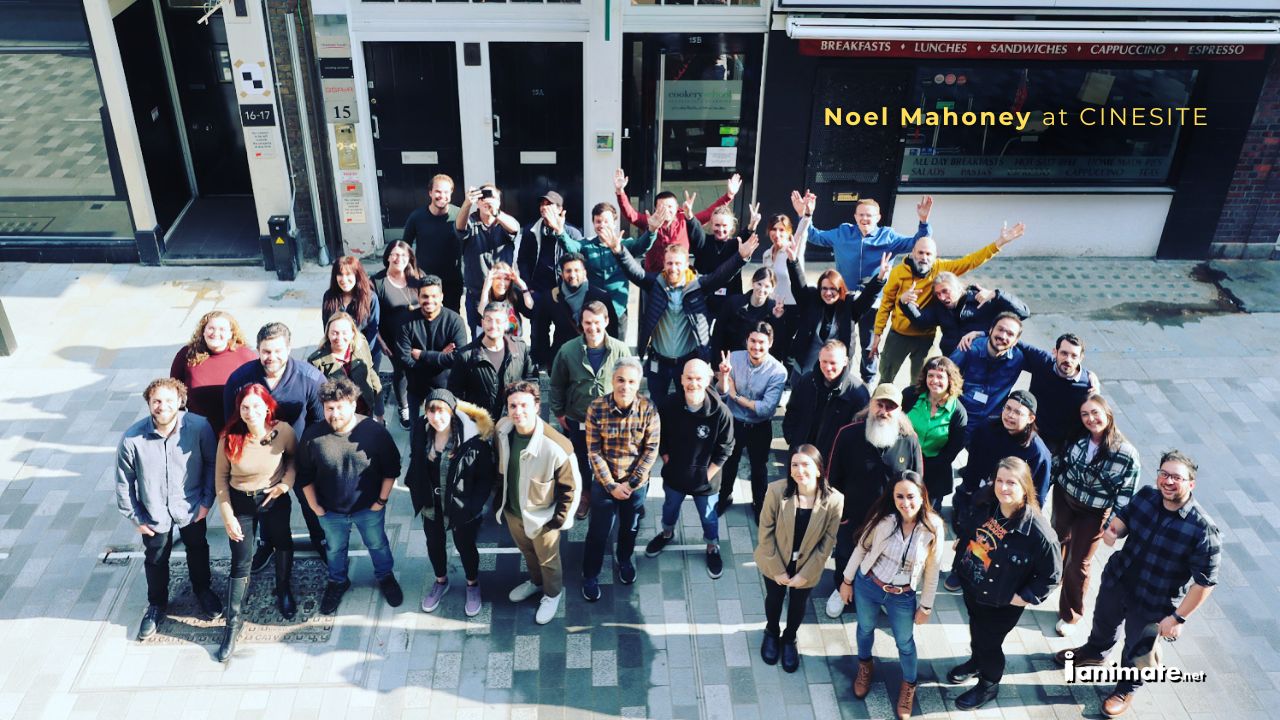
In 2020, I finally decided to commit and enrolled at iAnimate, studying body mechanics with Jason Keane while working as a CG Generalist at Cinesite in London. It started as a tester, just to see if this was really the path I wanted to follow. Then the pandemic hit, projects slowed down, and I suddenly had the unexpected gift of time to fully dive into the course. As tough as that period was globally, for me it was the moment I realised without doubt that animation is where I’m meant to be, and I’ve been chasing that path ever since.
Since then, I’ve been fortunate to work on projects like Jurassic World Rebirth, Black Panther, The Witcher, and many more. Opportunities I owe to the incredible mentors I’ve had along the way and the supportive animation community that keeps pushing me forward.
iAnimate: Walk us through a day in the life of an animator at your current work
Noel: A day in the life of an animator can vary from studio to studio, but it usually starts with checking for notes on the work I submitted the day before, catching up on emails, and looking over my schedule to see when dailies or other key meetings are happening. Some remote studios also kick things off with a team huddle, but that depends on the production.
If I have any questions about my shot, I’ll check in with my lead or supervisor to make sure I’m crystal clear on what’s needed. Then it’s time to animate! I’ll usually push the shot to a stage I’m happy with, whether that’s blocking, WIP, or polish, and share it for feedback. Getting notes regularly is key! It keeps you pointed in the right direction and avoids wasted time.
Most studios hold dailies in the morning, where the Animation or VFX Supervisor reviews the previous day’s work. On busier shows, you might also have “afternoonlies,” which are great for getting same-day feedback and keeping things moving quickly.
From there, the rest of the day is spent iterating, refining, and pushing the shot forward until the end of the day, and then the cycle starts all over again!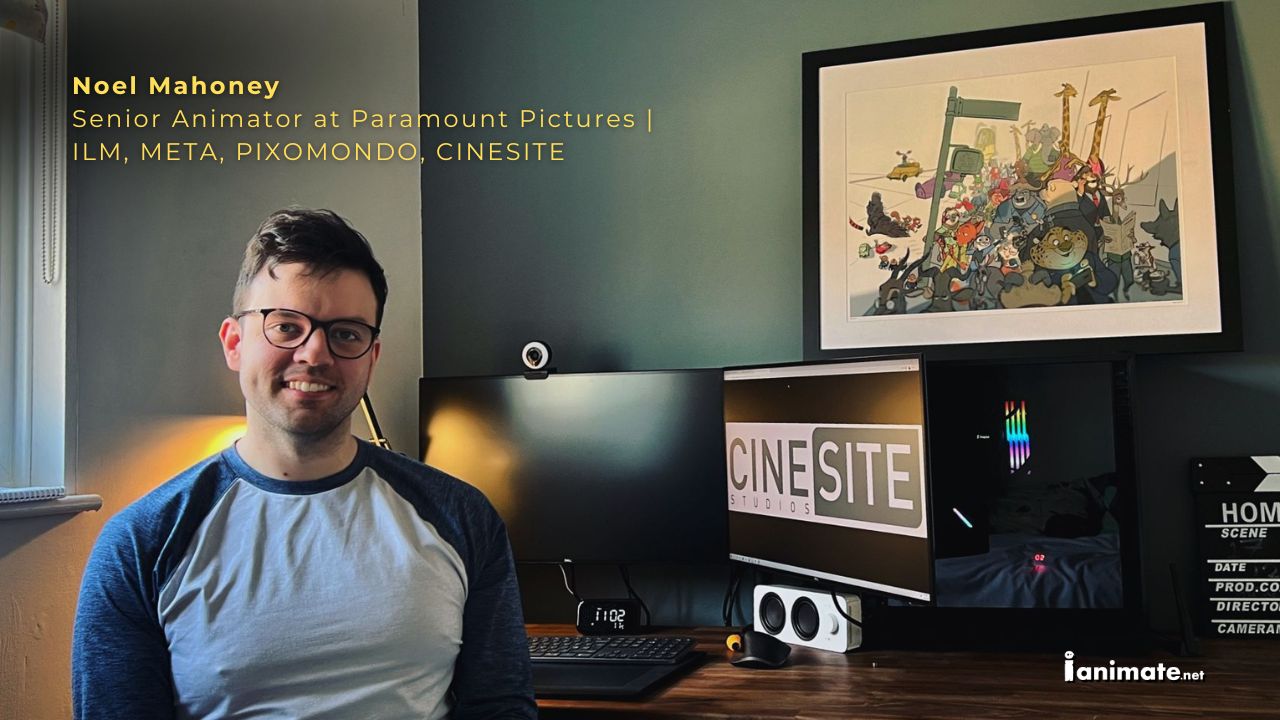
Animation Lessons and Growth
iAnimate: How did iAnimate help prepare you for the industry? What were the most important things you learned at iAnimate?
Noel: The biggest way iAnimate prepared me was by providing a clear and focused direction. We live in a world with a wealth of knowledge at our fingertips, but without a guide, it's incredibly easy to get lost. I had tried learning on my own for years, and honestly, a lot of the time I felt like I was just spinning my wheels and getting nowhere.
That all changed when I started at iAnimate. Having a mentor, an industry professional, who not only taught us but also shared crucial industry insights and gave us a realistic picture of what to expect as an animator, was a complete game-changer. It was like the fog I’d been navigating on my own had finally lifted.
If I had to pick the most important thing I learned, it was the value of the feedback loop. Learning how to seek out, interpret, and apply professional critique is a skill you can't get from a pre-recorded tutorial. That combination of direct mentorship and priceless insider knowledge is what truly closed the gap between being a student and feeling ready for the industry.
iAnimate: What is the most challenging shot you’ve ever animated, and why did you succeed at the shot?
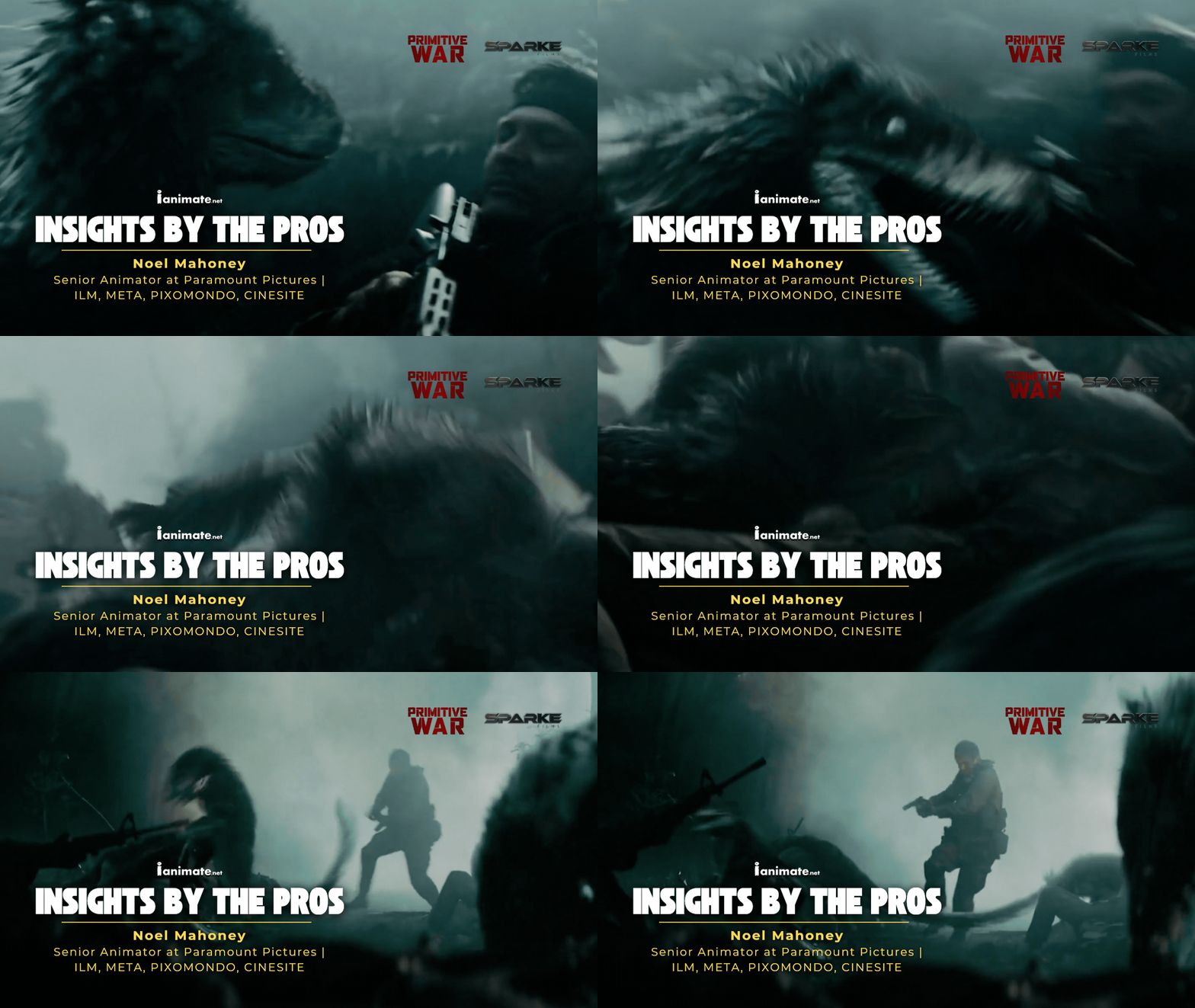
Noel: My most challenging shot involved animating 13 creatures running in to attack a character. It was a major, story-defining moment for the film, so their performances had to be 'perfect'. To add to the pressure, we were very close to the wrap date, so I had an extremely tight deadline.
It was a huge learning opportunity. I had to quickly figure out how to work efficiently without sacrificing quality. My solution was to animate smart cycles and loops, which I could then adapt and offset for each creature. This gave the illusion that every creature was acting independently, even when using shared animation.
While stressful, I'm glad I was given the shot, and I learned a lot. The key lesson was the power of practical planning. I now always ask critical questions upfront. Where can time be saved? How can I direct the viewer's eye in a busy frame? Realising that strategic planning is the key to tackling complex shots was a massive takeaway for me.
iAnimate: What do you do to stay inspired and motivated animator?
Noel: Staying motivated can definitely be a challenge, especially when deadlines get tight. For me, going back to the films that inspired me in the first place is a huge boost. They remind me why I wanted to be an animator. Even though I’ve been focused on creature shows recently, I’m hugely inspired by feature animation. I’ve loved films like K-Pop Demon Hunters, The Bad Guys 2, Elio, Spider-Verse, and The Mitchells vs. the Machines (which I think is still such an underrated gem!).
Lately I’ve also been really inspired by animators who’ve taken the leap into creating their own independent projects. For example, Steamroller’s Spice Frontier is such an impressive IP, and I really admire the courage and creativity behind it. Same with Garrett Animates and his project Chirp Mail. It’s exciting to see animators exploring not just the craft, but also the business and storytelling potential of original IPs. The industry is constantly evolving, and seeing that entrepreneurial side of animation is incredibly motivating for me.
[Noel's Current Reel]
Website: https://www.noelmahoney.com/
Animation Career Advice & Tips
iAnimate: Do you have any demo reel or interview advice you can share with animators on the job hunt?
Noel: My main piece of advice is to be absolutely ruthless with your demo reel. When you’re starting out, it needs to be short and concise (I’d say no longer an a minute), and honestly, that advice holds true even when you're a senior. Always put your absolute best work right at the start, as that first shot sets the bar for your skill level. If you're unsure about a piece, just leave it out. It’s far better to have three incredible shots than three great shots mixed with two mediocre ones because you will likely be judged by your weakest shot. Be honest with yourself and cut anything that doesn’t represent your skill level today. This also means leaving out fundamental exercises like bouncing balls. Even if you animated the most amazing bowling ball drop, recruiters are looking for performance and are expecting you to be further along.
In terms of interview advice, a lot of interviews are fully remote now. Just because you’re in the comfort of your own home, it’s still important to make an effort to present yourself and your environment professionally. A clean, non-distracting background makes a great impression. It's also crucial to do your research on a company before you talk to them. An interview is a two-way street, so come prepared with your own thoughtful questions. It shows that you have a genuine interest in the company and are seriously considering if it's the right fit, which is always impressive.
iAnimate: If there’s one animation tip or technique you’d share with someone wanting to animate in a feature film, what would it be?
Noel: My top tip would be to master the foundations as deeply as you can. Having a rock-solid understanding of the fundamentals will save you countless headaches later in your career when you're tackling more advanced work. A huge part of that is learning not to bite off more than you can chew. Keep your practice shots manageable so you can really focus on the details. For example, if you want to practice a skill you're still developing, like lip-sync, don't jump into a multi-character sequence. Instead, focus on the core task. Animate a short, 100-frame shot of one character saying a single sentence, or even just shouting 'WHAT?!'. By keeping your exercises simple and focused, you learn the core skills more deeply, which is ultimately the fastest way to grow as an animator.
iAnimate: What other advice do you have for current or future iAnimate students?
Noel: One of the most important pieces of advice I can give is this… animate the kind of work you want to be hired to do. Your reel is a direct application for your ideal job, so it should be a clear reflection of your career goals.
If your passion is creature animation, fill your reel with dynamic creature work, not feature-style acting pieces. Conversely, if you want to work in feature animation, your focus should be on character performance and pantomime. It's perfectly fine if you're interested in both, but be intentional with that choice. A mixed reel signals that you'd be a great fit for studios that handle a variety of projects, like Framestore or (very recently) ILM. Ultimately, you are curating your portfolio to attract the specific studios and projects you're most passionate about.
iAnimate: Given that there’s so much to learn, how would you recommend a brand-new animator start their training?
Noel: For someone just starting, the most effective first step is simply to begin. My advice would be to find a good tutorial for a classic bouncing ball animation and just give it a try. Get yourself the book ‘The Animators Survival Kit’ by the legendary Richard Williams and read it. There's also a wealth of free resources online, and this is the best way to answer the most important question: do you actually enjoy the process of animating? You can only find that out by doing it! Once you've confirmed that this is the path you're passionate about and you're serious about making it a career, that's the time to invest in a structured program, I believe. A dedicated school like iAnimate is invaluable for this next stage, as it provides the focused, expert-led learning path you need to build the specific skills that studios are looking for and turn your passion into a profession.
iAnimate: What makes a great animator or an animator that a studio would hire?
Noel: What makes an animator truly great, and the kind a studio will hire, goes far beyond just producing awesome work. It’s about being a pleasure to have on a team. Be a great communicator who is good with time management and, most importantly, leaves their ego at the door. Being humble is one of the most valuable traits you can have. Animation is a surprisingly small industry, and your reputation is everything. Being someone people enjoy working with will directly lead to recommendations and future opportunities. A great animator listens to feedback and acts on it constructively. While it’s fine to ask questions to clarify a note, knowing how to take direction gracefully is the mark of a true professional that supervisors value highly.
Date Published: October 29, 2026
Date Modified: November 13, 2026
Noel built his foundation in iAnimate’s Body Mechanics class and Feature Animation. Ready to level up your own animation? Explore Our Workshops
Want to learn what Disney, Pixar, and Blizzard do in their animations?
Be mentored by industry professionals from the leading studios in the industry. Start your animation career and get the dream animation job you want! Learn more about iAnimate and the Workshops that are made just for you.