Forevergreen Short Film: A Faith-Based Animation Masterpiece
iAnimate Animation Podcast Episode 104: Go inside the making of Forevergreen short film, the wood carving animation style, the Disney veterans behind it, and the story's deeper meaning.
Forevergreen is an animated short film about a grumpy bear and a falling redwood tree, built around themes of redemption and unmerited grace. It was created over seven years by Disney veterans Jeremy Spears and Nathan Engelhardt using a unique "wood carving" animation style, with the help of 200 volunteers. This post breaks down the film's origins, its visual style, and the story behind it.
Forevergreen with Disney Veterans Jeremy Spears & Nathan Engelhardt | EP 104 Animation Podcast
You watch a lot of animated shorts. Most of them look the same — same software, same smooth CG, same polish. Then Forevergreen shows up, and it looks like nothing else out there.
Turns out there's a reason for that. Two Disney veterans spent seven years — nights and weekends — building something that looks carved out of wood, not rendered on a computer.
Here's the full story: where it came from, how they pulled off that style, and why it's resonating with people far beyond the animation world.
"Larry Vasquez sat down with Jeremy Spears and Nathan Engelhardt on the iAnimate Animation Podcast Episode 104 to talk through the whole Forevergreen short film journey. Here's what stood out."
Watch the full conversation with Jeremy Spears and Nathan Engelhardt on the iAnimate Animation Podcast.
The Origins of Forevergreen: From "Three Trees" to a Bear's Redemption
Forevergreen began development in 2019 as a passion project loosely inspired by the classic story "The Three Trees." Over seven years, co-directors Jeremy Spears and Nathan Engelhardt evolved the concept into an original story centered on a grumpy bear and a falling redwood tree, using the redwood as a symbolic bridge across a divide. (Source: iAnimate Animation Podcast Episode 104 Interview, 2026)
Every long passion project starts somewhere small. For Forevergreen, that starting point was "The Three Trees" — a story a lot of people grew up with.
How the story evolved:
- 2019: Development begins as a side project, inspired by "The Three Trees"
- The shift: The team moved away from a direct retelling and built something original
- The core image: A falling redwood tree becomes the bridge — literally and symbolically — between two sides of a divide
- The character: A grumpy bear becomes the emotional center of the story, carrying the theme of redemption
"Larry Vasquez asked Jeremy directly why they moved away from the source material. His answer says a lot about how this team thinks about story."
Disney Veterans at the Helm: Jeremy Spears and Nathan Engelhardt
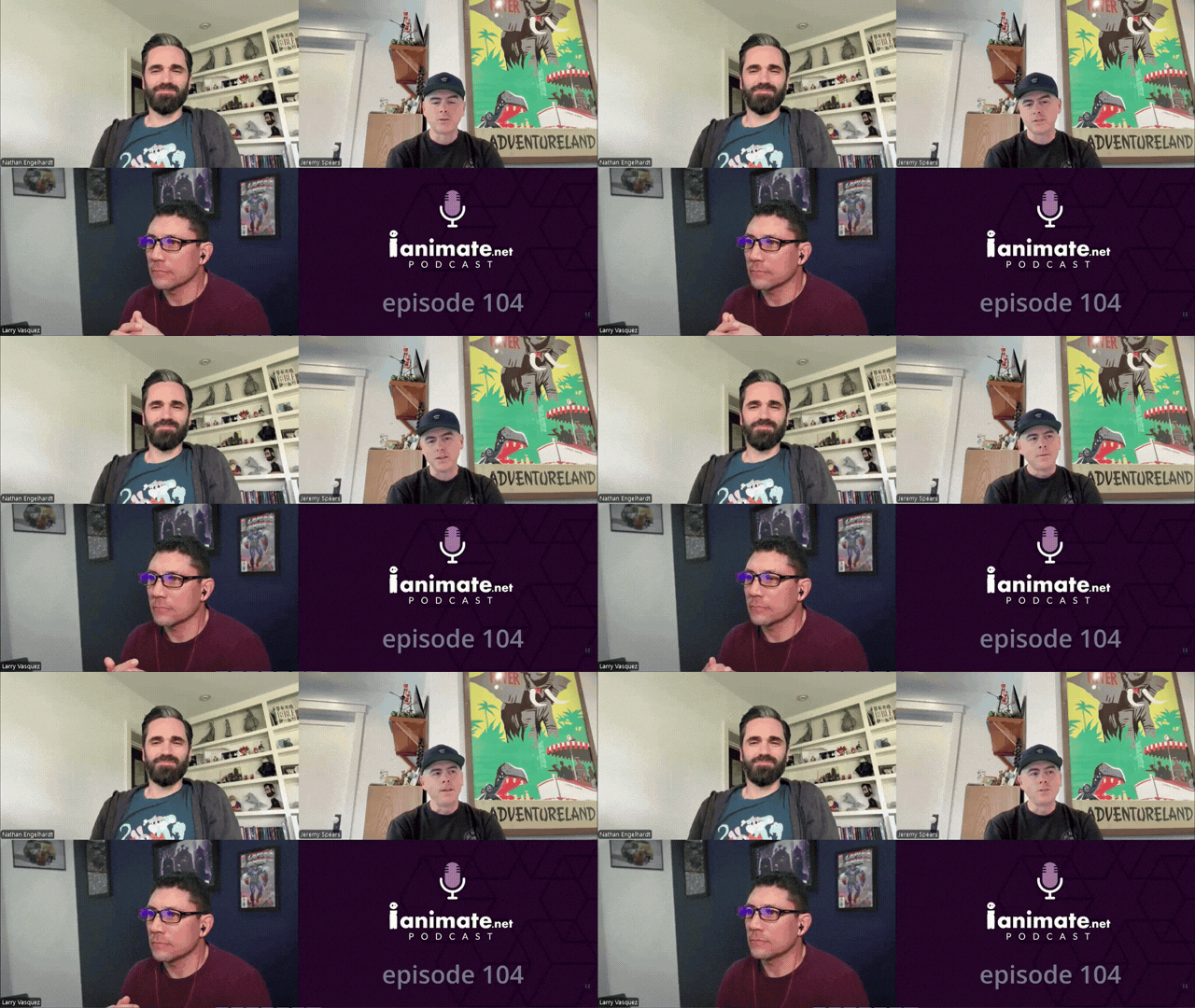
Forevergreen was co-directed by Jeremy Spears, a storyboard artist, and Nathan Engelhardt, an animator, both of whom have spent over 18 years working at Disney. The two balanced their full-time professional careers with building Forevergreen as a passion project over seven years. (Source: iAnimate Animation Podcast Episode 104 Interview, 2026)
This wasn't a student film. This wasn't a studio-funded short either. This was two guys with 18+ years at Disney between them, building something on the side because they had to make it.
Who's behind it:
- Jeremy Spears — storyboard artist, co-director, 18+ years at Disney
- Nathan Engelhardt — animator, co-director, nearly two decades at Disney
- The balance — full-time studio careers during the day, Forevergreen on nights and weekends for seven years
The creators describe Forevergreen as a deliberate response to a trend they observed in modern animation, a focus on "breadth" rather than "depth" or "soul." Forevergreen was built to prioritize universal human truths and emotional relatability over visual scale. (Source: iAnimate Animation Podcast Episode 104 Interview, 2026)
Larry interviewed animators across the industry; "the 'breadth vs. depth' point Jeremy made is something I've heard echoed by a lot of veteran artists lately."
The Spiritual Heart: Parables and "Unmerited Grace"
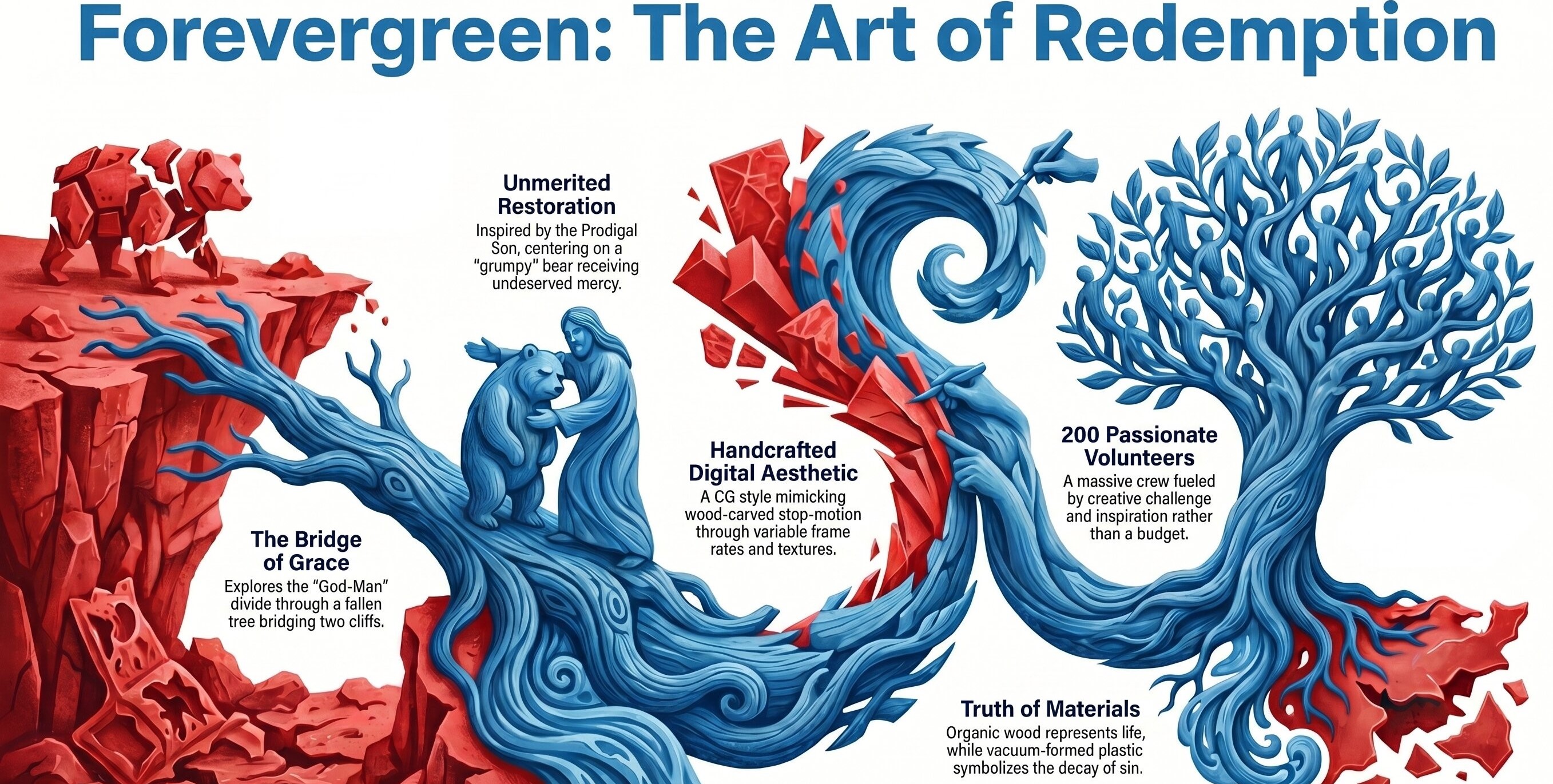
Forevergreen draws its central theme from the parable of the Prodigal Son, which the creators describe as the story's emotional "credit." The film explores the concept of unmerited grace, receiving forgiveness or love that hasn't been earned as its core emotional message, visually represented through cliffside imagery depicting a divide between God and man, bridged by a cross-like form. (Source: iAnimate Animation Podcast Episode 104 Interview, 2026)
Here's where Forevergreen goes deeper than most short films even attempt to go.
The story's spiritual layers:
- The Prodigal Son — the biblical parable that inspired the film's emotional arc
- Unmerited grace — the idea of receiving something good you didn't earn — is the film's core message
- The cliffside imagery — represents a divide between God and man
- The bridge — shaped like a cross, connecting both sides of that divide
This isn't subtle symbolism buried for film students to find. It's the whole point of the movie.
A Revolution in Style: The "Wood Carving" Aesthetic Explained
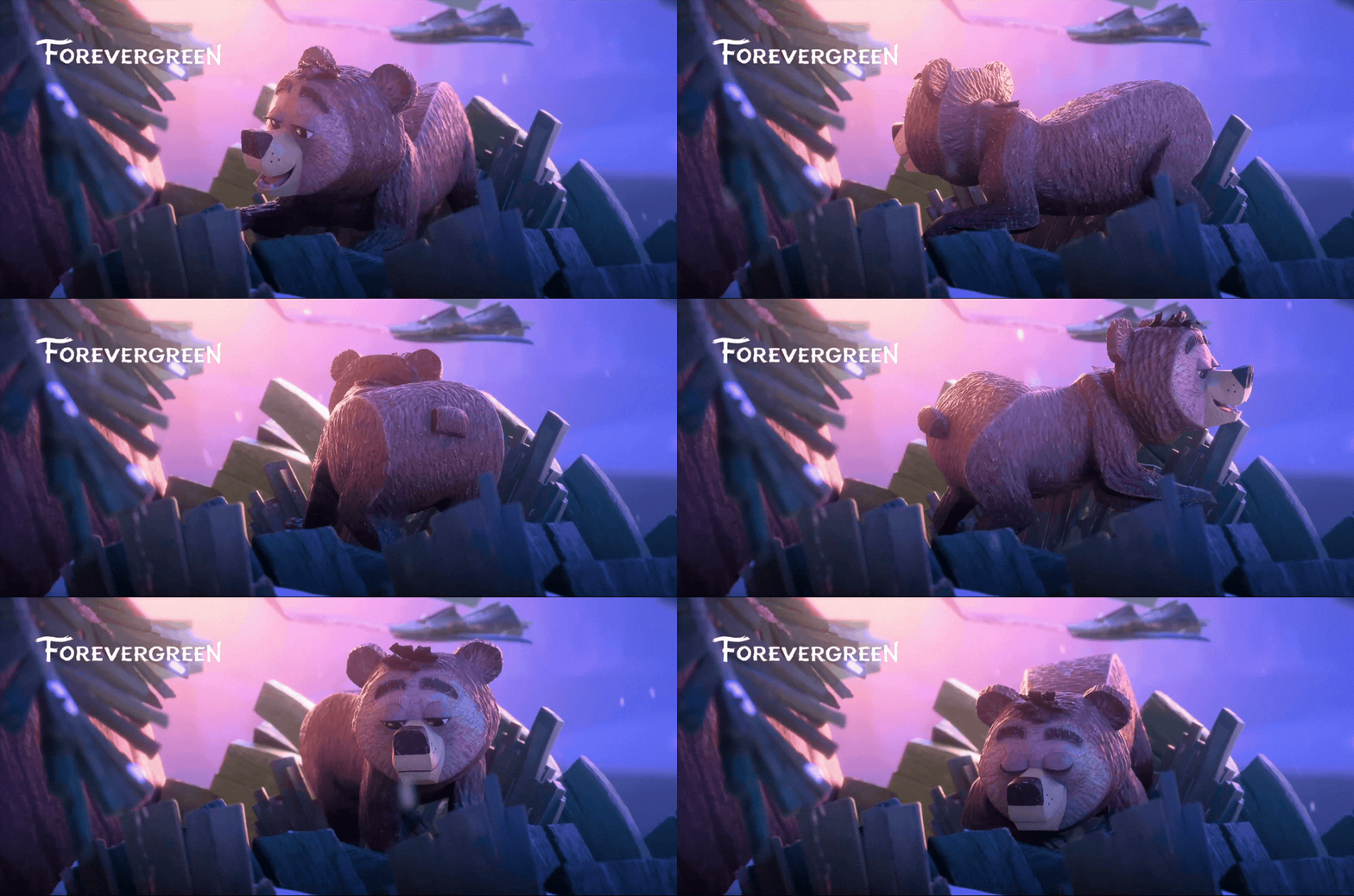
Forevergreen's visual style is built on what its creators call the "three legs of the tripod": variable frame rates, internal textural boil, and external silhouette geometric boil. This combination, paired with a "truth of materials" philosophy — where wood-textured elements move and bend the way real wood would, not like standard CG — gives the film its distinctive carved, handmade appearance. (Source: iAnimate Animation Podcast Episode 104 Interview, 2026)
This is the part animators are going to want to bookmark. The "wood carving" look isn't a filter. It's a whole animation philosophy.
The three legs of the tripod:
- Variable frame rates — animation that shifts speed deliberately, creating a stepped, stop-motion feel rather than smooth 24fps motion
- Internal textural boil — surfaces subtly shift and "breathe," like wood grain catching light
- External silhouette geometric boil — the outer edges of characters and objects subtly shift shape, frame to frame, as a hand-carved object would never sit perfectly still
Truth of materials: The team built a rule into the film: wood shouldn't bend like rubber. If something is supposed to be made of wood, it has to move like wood — rigid, with weight, with grain. That single rule shapes how every character and object in Forevergreen moves.
The animation style of Forevergreen was partly inspired by stop-motion replacement animation, the technique of physically swapping out a character's mouth or face model frame by frame to create expression changes. The team adapted this concept digitally to preserve the handmade, carved feel throughout the film. (Source: iAnimate Animation Podcast Episode 104 Interview, 2026)
Handcrafted World-Building: The Wooden Waterfall and Plastic Trash
Forevergreen uses material symbolism throughout its world-building, including a waterfall rendered in the same wood-carved texture as the rest of the film, and vacuum-formed plastic elements representing trash and sin. The contrast between organic, wood-textured environments and synthetic plastic forms reinforces the film's underlying themes. (Source: iAnimate Animation Podcast Episode 104 Interview, 2026)
Even the environment carries the film's message.
Symbolic materials in the world:
- The wooden waterfall — water itself is rendered in the same carved-wood texture as everything else, keeping the world visually consistent and intentional
- Vacuum-formed plastic — used to represent trash, and by extension, sin — a synthetic material standing out against an otherwise organic, handmade world
This is world-building where every material choice means something. Nothing is just "set dressing."
Mobilizing the Crew: How 200 Volunteers Built an Oscar-Nominated Short
Forevergreen was produced with the help of approximately 200 volunteers, a strategy the creators describe as getting enough people to each "lift a corner of the table." This collaborative, volunteer-driven approach allowed two working professionals to complete an Oscar-nominated short film over seven years without traditional studio funding. (Source: iAnimate Animation Podcast Episode 104 Interview, 2026)
Here's the part that should give every indie animator hope.
How they pulled it off:
- ~200 volunteers contributed to the film during its production
- The philosophy: instead of finding a few people to carry the whole load, find enough people to each "lift a corner of the table"
- The result: a film made on nights, weekends, and volunteer hours — that ended up Oscar-nominated
- Production timeline: 2019–2025
- Crew: ~200 volunteers
- Co-directors' combined Disney experience: 18+ years each
(Source: iAnimate Animation Podcast Episode 104 Interview, 2026)
"Larry has seen plenty of passion projects stall out from a lack of hands. What made Forevergreen different wasn't funding, it was this exact mindset."
Conclusion: The Power of Human Relatability in Modern Animation
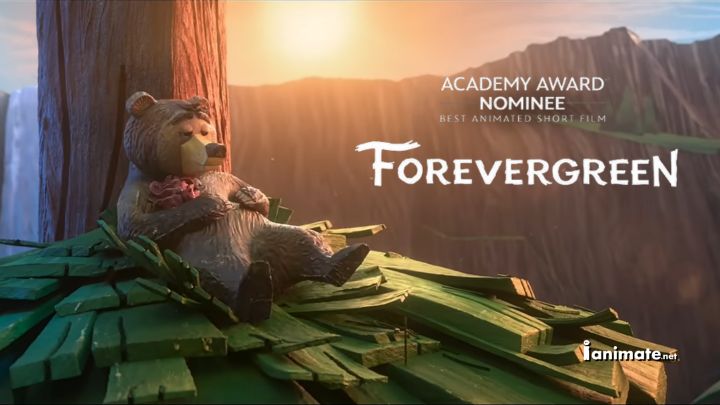
Forevergreen represents a deliberate move toward emotional depth over visual breadth in animation. By combining a handcrafted "wood carving" visual style with a story rooted in universal themes of redemption and unmerited grace, the film prioritizes human relatability, a quality its creators felt was missing from much of modern animation.
A lot of animated shorts chase scale. Bigger worlds, more characters, more spectacle.
Forevergreen went the other way. One bear. One tree. One moment of grace.
And it's that smallness, that focus, that's making people feel something.
Frequently Asked Questions: Forevergreen Short Film
Q: What is the Forevergreen short film about?
A: Forevergreen is an animated short film about a grumpy bear and a falling redwood tree, exploring themes of redemption and unmerited grace. The story is inspired by the parable of the Prodigal Son and uses a falling tree as a symbolic bridge across a divide.
Q: Who created Forevergreen?
A: Forevergreen was co-directed by Jeremy Spears, a storyboard artist, and Nathan Engelhardt, an animator. Both have over 18 years of experience working at Disney and built Forevergreen as a passion project alongside their full-time careers over seven years.
Q: What animation style does Forevergreen use?
A: Forevergreen uses a "wood carving" animation style built on three techniques: variable frame rates, internal textural boil, and external silhouette geometric boil. The film follows a "truth of materials" philosophy, where wood-textured elements move like real wood instead of bending like standard CG.
Q: How long did it take to make Forevergreen?
A: Forevergreen took approximately seven years to make, starting development in 2019. The film was created by its two co-directors alongside roughly 200 volunteers, all while the directors maintained full-time jobs at Disney.
Q: Is Forevergreen based on a true story or religious text?
A: Forevergreen is inspired by the parable of the Prodigal Son and explores the concept of unmerited grace. While not a direct retelling of a specific religious text, the film's visual symbolism — including cliffside imagery and a cross-shaped bridge — draws heavily on Christian themes of redemption and forgiveness.
Q: Was Forevergreen nominated for an Oscar?
A: Yes, Forevergreen received an Oscar nomination. It was produced with the help of approximately 200 volunteers over a seven-year production period, without traditional studio funding.
Written by Larry Vasquez
Larry Vasquez is a Partner and Operations Manager at iAnimate. He hosts the iAnimate Animation Podcast, where he's spoken with animators and directors from Disney, Pixar, and DreamWorks about their craft and creative process. He oversees internal communications, fostering connections between students and instructors.
🎯 Is This for You?
This post is for you if:
- You're curious about the Forevergreen short film and its story
- You're an animator interested in the "wood carving" visual technique
- You want to understand the film's deeper spiritual meaning
- You're inspired by independent, passion-project filmmaking
📌 Key Takeaway: Forevergreen is a seven-year passion project by two Disney veterans, built around a "wood carving" animation style and a story about redemption inspired by the parable of the Prodigal Son, made possible by roughly 200 volunteers.
Want to Learn the Techniques Behind Films Like Forevergreen?
iAnimate is an online animation school offering mentorship-based 3D animation workshops taught by professional animators from top studios like Pixar, Disney, DreamWorks, and Bungie. Since 2010, iAnimate has trained artists worldwide, helping them develop the skills needed to become professional animators, all through flexible online learning.
Learn character animation, storytelling, or production techniques like the ones used in Forevergreen.
Show Notes:
Interviewer - Larry Vasquez